
Major Changes to Public Education Under Consideration in both Orange Southwest School District and Beyond
Abstract
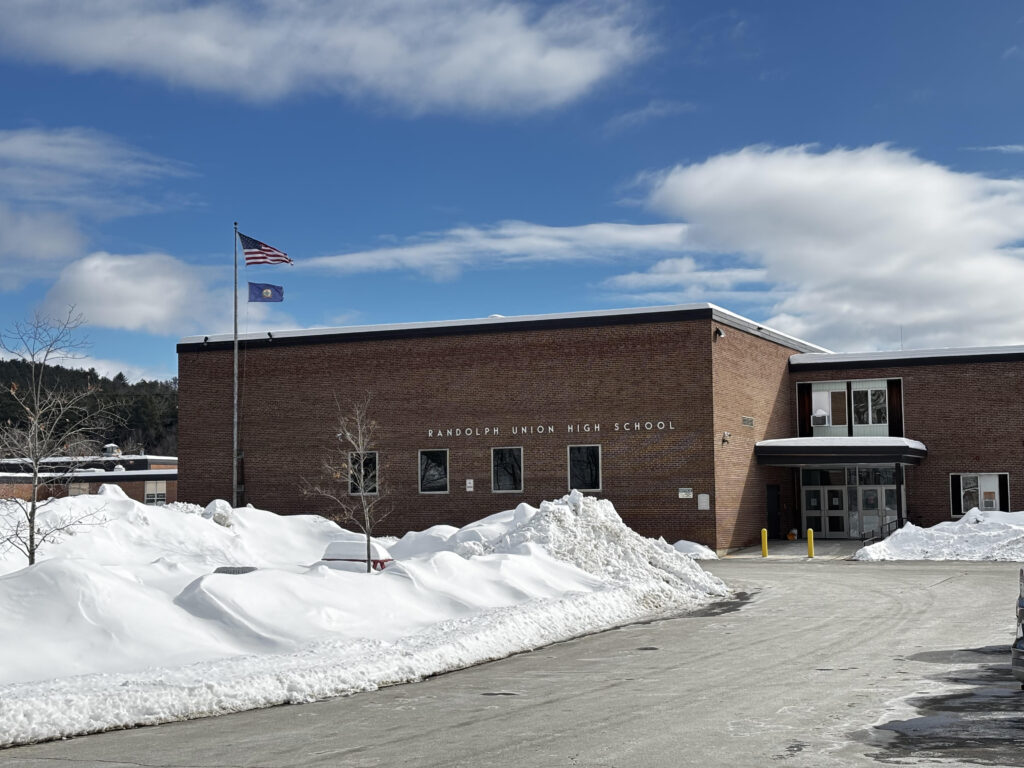
As a small, rural state, Vermont is no stranger to navigating challenges around public education funding and administration. Vermont’s mountainous geography and demographic makeup have always imposed limits on what the state can and cannot achieve in meeting the educational needs of its school-aged population, but creative legislative solutions and a proud tradition of local involvement have historically mitigated many of these inherent challenges. In recent years however, Vermont’s educational system has come under unprecedented pressure from both new and existing sources, to a degree that many believe will require transformational changes to public education at both the local and state levels. In the following excerpts, members of the RU Connected PBL at Randolph Union High School explore different facets of the situation the state and the Orange Southwest School District now faces and how proposed changes at both the state and local levels will fundamentally transform the educational experiences of students in coming years.
The OSSD 2025-2026 School Budget Debate
While conversations around the future of public education in Vermont have garnered a great deal of attention across the state, discussions around education funding within the Orange Southwest School District (OSSD) have been closely followed at the community level since talks began this past fall. Voters within the OSSD have historically supported public education spending, but the rapidly rising cost of public education in recent years has raised questions around whether the community is reaching the limits of what it is willing to pay for. The 2024-2025 budget saw unprecedented increases (primarily paid for via local property taxes), and even maintaining current services next year are projected to entail a roughly 10.5% increase. In response to these projections, the OSSD school board requested a 10-tier series of budget proposals that would reduce expenditures by $250,000 at each level. On the evening of February 19th, the OSSD school board decided to propose a budget that contained cuts from the first four proposed levels. This proposal, which voters will either pass or reject on Town Meeting Day, would see a 6.26% increase from the last fiscal year. However, this proposal still includes $1.1 million in cuts from a level service budget. The implications of tiers 1-4 are spelled out here:
- Level One: Level one is the starting point for cost-saving measures with cuts and changes, such as eliminating the district human resources director position; an administrative position that directs and ensures legal compliance for the school. Other cuts include removing an unfilled bus driver position, making the bus schedule even tighter for students who need transportation to and from school. It also proposes to eliminate the farm-to-school program, minimizing support for local farmers and impacting food quality for school lunches. Another impactful cut is reducing the Special Education evaluation budget, which would impact students with needs and decentralize Special Education evaluation, while saving $20,000. Lastly, level one hopes to reduce supply line items at Braintree, lessening educational materials for Braintree and saving $4,400.
- Level Two: Cuts within level two include getting rid of uniforms for facilities employees. It also includes eliminating unfilled staffing positions, such as bus drivers, custodians, and Para-Educators, removing $91,000 from the budget. In addition, level two will include disbanding the late bus. The late bus allows many students who lack reliable transportation to participate in after school extracurriculars and eliminates $85,000 of the budget. Another significant cut is funding for world travel, barring students from opportunities for school-funded trips. This may require students to rely on fundraising for any worldwide trips. An assortment of other funds being cut are gardening, pre-K supplies, and money for presenters. These will have impacts on student experiences from pre-K to high school. Field trip funds would also be cut, saving $4,000, but impacting student experiences across the board, and, again, making fundraising necessary. Lastly, subscription services that may impact certain subjects or grades will also be eliminated, saving $6,000.
- Level Three: Level three includes some larger cuts to certain programs. First on the chopping block is RES field trips, cutting out $4,000 in funds for elementary school students. Art supplies are also being cut out, saving $1,500 and impacting the art department. The nursing staff will be cut, getting rid of one full-time nurse in each building, getting down to one full-time nurse at RUHS, and saving a whopping $103,000. A library para position will be eliminated at RUHS, making the services the media center has to offer lessened. The three open Special Education para positions at RUHS will also be cut, which could present even more challenges to students who rely on special education services.
- Level Four: Level four only has two items on the chopping block, but these cuts clearly constitute some big-ticket proposals. The first goal of level four is to eliminate a classroom from pre-K programs for three-year-olds. That is a large item, and potentially a problematic one for working parents. Lastly, the Brookfield library position is being cut out, saving $38,000.
How Does the Local School Budgeting Process Currently Work?
The budget procedure is a very long, mind-numbing process. School boards must first create a budget for their district which will later be approved or rejected by the residents on town meeting day. Once the budget is approved by voters a spending plan has to be put in place. The school board sends a bill to the state for almost the entire amount. The state must pay for all the school budgets plus a handful of other related expenses.
Although the majority of the education fund is supplied by state property taxes, it only makes up for two-thirds of the total education fund. So, other funding sources are required such as lottery revenues, sales and use taxes, and medicaid transfers, just to name a few. State lawmakers have to check on these sources and see how they’re doing to figure out how much money to raise from property taxes. Property taxes are split up into two different categories, homestead taxes and non-homestead taxes. Homestead taxes are applied to all primary residences while non-homestead taxes are applied to all other properties like commercial buildings, second homes, and rental properties. The tax rate for homestead and non-homestead taxes get decided separately. Non-homestead tax rates are technically one statewide rate that was decided by the Legislature. Yet to ensure fairness a common level of appraisal, or a CLA, is introduced and this adjusts the tax rate in each town.
Each school district is also given a rate, although this rate is dependent on a school’s spending per pupil. Therefore districts that have lower spending per student, have lower tax rates. Although these rates that are assigned to each pupil have to be adjusted depending on that town’s common level of appraisal, the difference can be quite shocking to some. The per pupil calculation itself is complicated as some students cost more to educate, such as children in poverty or living in rural areas. So students have to be weighted differently when it comes to figuring out how much a district is spending per student. Act 127 is a law that adjusts these weights and directs the money towards students and schools who need it most.
Vermont overall subsidizes property taxes, which means if a household earns below a certain amount they receive a tax credit. Now unless lawmakers decide to change this complicated structure, there are typically two choices to make. First it has to be decided how much of the burden to put on the homestead taxes versus the non-homestead taxes. If lawmakers are lucky, a surplus is found and then it has to be decided what to do with the extra cash. A surplus however, can be a double-edged sword. One time money is always best spent on one time expenses, yet politically it can be tempting to use the surplus to bring the pressure off of the property taxes. The barrier with that is it would require tax rates to play catch up the following year since education spending is an ongoing expense. As a result, you risk a spike. The budget procedure is overall extremely complex and complicated. The reason it hasn’t been changed to be simpler is because it was designed to be fair while preserving local control.
A Summary of OSSD’s School Budgeting History
Historically, our district has approved school budgets upon first vote. This time around however, the OSSD school board is considering cutting several million from the budget. Beyond our district, other districts have also entertained cutting several million from their budgets. For example, Woodstock has proposed cutting $2.5 million. Most districts are trying to cut as much money as possible to reduce the burden felt by local taxpayers. While voters in the OSSD have clearly expressed their support for public education, the reality of rising costs in a number of areas has put the community in a potentially uncomfortable position on Town Meeting Day this year. The short-term situation has been compounded by larger state-wide changes being considered in Montpelier. Because of this, 119 school districts are currently active in Vermont. However, Governor Scott is trying to narrow them down to just five. There were originally three-hundred districts, but between 2015 to 2018, it has since been lowered to 119 districts. Along with these cuts, the Vermont legislature is planning on revoking our ability to acquire free meals for lunch, and is reverting back to paid meals.
A Summary of Public Education in Vermont
There are a number of factors that complicate Vermont’s ability to create a sustainable and efficient education system and pressures to find a solution have been increasing rapidly. Factors such as rising costs of healthcare, housing, and cost of living have increased the burden felt by local taxpayers. In June of 2015 Vermont passed a law titled Act 46 to attempt to battle these challenges and provide a more efficient and equitable education system. Act 46 strongly encouraged school districts to consolidate, and if consolidation plans did not meet certain requirements the state would intervene and appropriate consolidations. Negotiations between districts took three years and the final order was implemented in late 2018. Act 46 merged forty-five schools into 11 new school districts and expanded an additional three districts. However, despite the efforts of Act 46 the state is still facing challenges to provide an efficient, affordable, and equitable education system. This has caused an appetite for drastic changes in the 2025 legislative session.
Beyond Students, Who Else Will Be Impacted By Budgeting Decisions?
With significant short-term and long-term changes to education funding being considered at both the district and state levels, a wide variety of stakeholders stand to be impacted. The term ‘stakeholder’ refers to anyone who can affect or be affected by anything in relation to a particular policy: students, teachers, para educators, other faculty members, administrators, parents and any taxpayers. Every one of these positions would be impacted by the upcoming budget proposals, especially taxpayers and staffing. As highlighted in the OSSD budget tiers discussed earlier, many staff positions could be cut, such as Pre-K teachers, school librarians, school nurses, and bus drivers. A more specifically devastating blow to parents was initially discussed in the fourth tier, where Pre-K for three year olds could be cut entirely in OSSD. Although public outcry has persuaded the administration to reconsider. On February 19th, OSSD superintendent Michael Clark announced that Pre-K for three year olds will only see a reduction in classrooms, from four to three, resulting in more students per class but not outright eliminating the program. This was a big sigh of relief for many families. Not only have studies shown that children who took Pre-K ended up performing better upon entering school, but it also serves as a way for children to remain supervised while the parents work. Removing this for young children would force parents to reallocate more of their time and resources to keep an eye on their children; they would either have to take time out of their own schedule to watch their children, or hire a babysitter. In both cases, it would put families further down the trenches even amidst external factors and variables. The lack of certainty around education administration and funding also introduces uncertainty for teachers, district administrators, and school employees.
What Proposals Are Being Considered In The Statehouse?
With a clear appetite for change, Governor Scott, the Teachers Union, and Democrats in Montpelier have all proposed potential solutions to long-term education funding and administration systems in Vermont. To start, the Vermont Teachers Union has suggested an income-based tax in place of the current system and partial property tax. This income-based tax has homeowners with a household income up to $130,000 and a home site worth under $1 million pay taxes based on their income. Alongside this there would also be a partial property tax, this proposal would require an extra $50-60 million to be cut from the education fund. To do so, they suggested a plan to either remove mental health and social services from the education fund, or to raise funding from alternative sources.
While the Teachers Union plans on advocating for their income tax proposal, Governor Scott has proposed his own measures. Governor Scott explained how to address the 5.9% property tax increase by indicating that he would spend $77 million to keep the property tax rates even. To tackle this, Governor Scott plans to get rid of the universal school meals law, which requires schools to provide free lunches for all students regardless of their income. This is mainly addressed since Governor Scott plans to create five separate districts, which would be the Southeast, Southwest, Northeast, Winooski, and Champlain regions. There would also be elected part-time school boards with one at each district, and local advisory councils to provide local input. According to Governor Scott, splitting into five districts would benefit in multiple ways. This would increase efficiency, reduce costs, and more. He plans to do this all while still maintaining a community input. Such as strengthening the state oversight, which would help to ensure that students are getting quality education and to provide an efficient use of the resources schools are provided with. He also believes this plan will help to define the average size of classes and schools with minimums and maximums, and that this plan will help them to standardize the graduation requirements for each and all districts. Governor Scott says this will be supported by a property tax system, which would be a single statewide Education Property Tax for homestead and non-homestead properties. This would also grant the ability for income-eligible homesteads to be able to file to exempt a portion of their home value from the Education Property Tax. Governor Scott also says communities would be able to choose to raise a limited amount of additional funds, and that a state guarantee could equalize each of the district’s ability to raise funding, up to a max amount. With all of this, he also plans to ensure students with similar needs will receive the funding needed, in no regards to geography. Adjustments, or weights, would be made for student’s needs which would include economically disadvantaged students and English Learners. Governor Scott says these changes would be expected within a three-year timeline.
In response to Governor Scott’s proposal, Democrat representatives conveyed their own proposals in exchange. Their idea is to make a 25 district cap, instead of the five districts as proposed by Governor Scott. The two representatives sponsoring the 25 district cap are State Representatives Matthew Birong and Edye Graning. This idea includes independent schools, not only public schools.