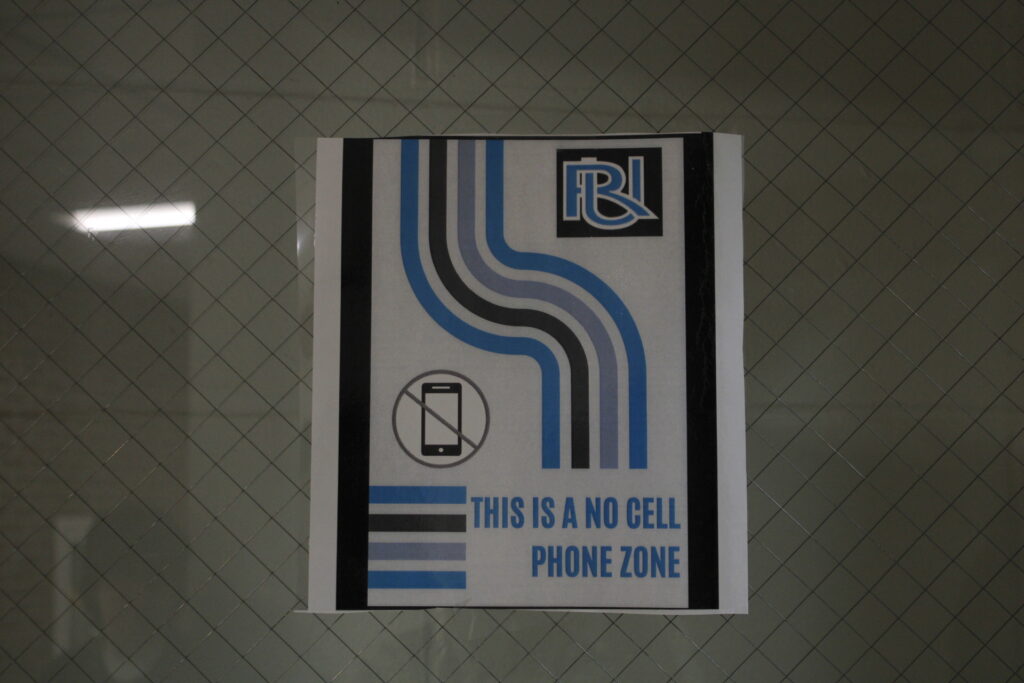
RU Rolls Out Updated Phone Policy
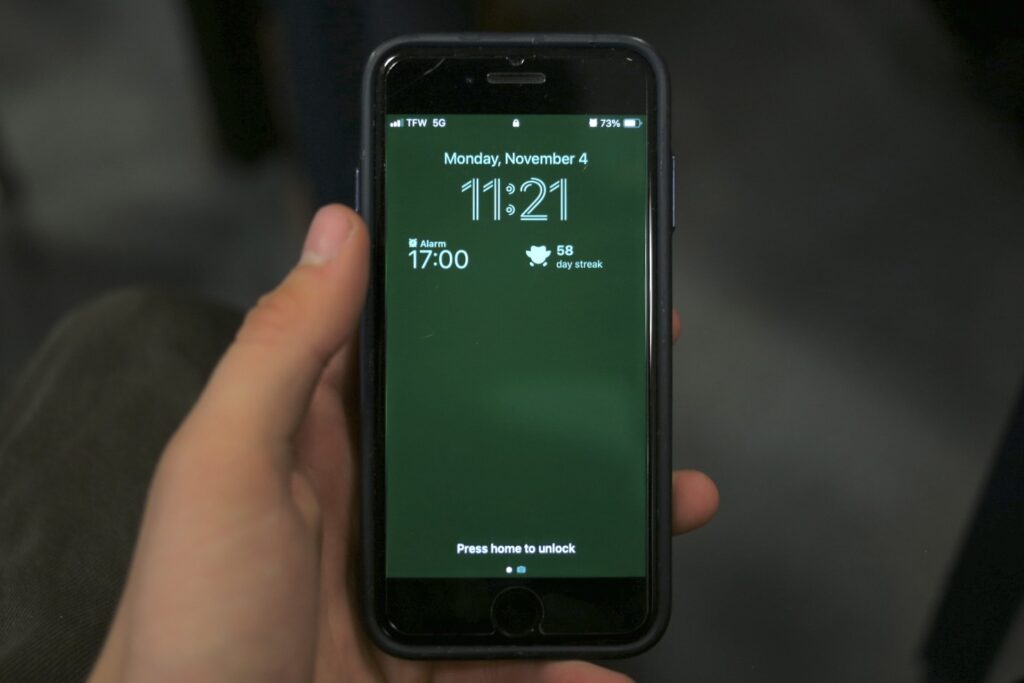
Schools across the nation have started restricting the use of smartphones. As attention has been drawn to this issue, many states have even introduced legislation regarding the use of personal electronics during school hours, with Florida leading the charge and at least fourteen other states following suit. Although Vermont lawmakers have not yet passed any laws regarding cell phone use in schools, a bill proposed from the most recent legislative session shows it is being considered.
Among other things, bill S. 284 proposes to ban or restrict the use of personal electronics and social media within schools along with granting students the option to opt out of using school issued electronics. To gain insight into the Vermont General Assembly’s thinking around this issue, RU Connected spoke with state Rep. Larry Satcowitz (D – Randolph).
“It is well known that phones in schools are becoming an increasingly important issue. These ideas are circulating among lawmakers. The fact that a bill got to the Senate in the first place and got passed is a good indicator that there is concern” noted Satcowitz when asked about the bill.
While Vermont lawmakers have not taken action yet, it could be just a matter of time.
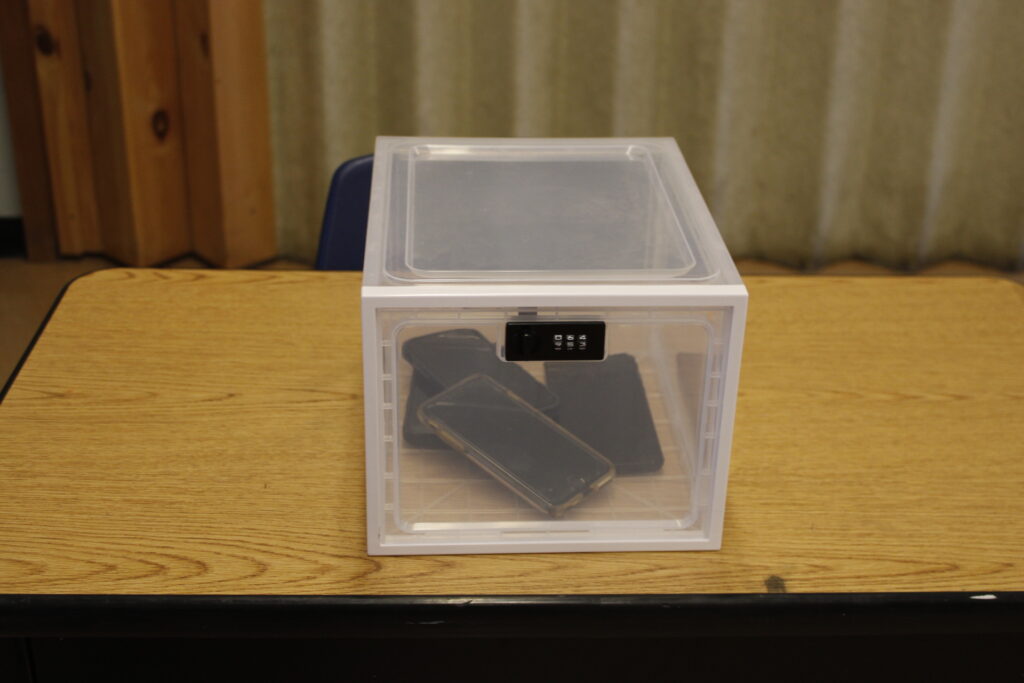
Even without government support, schools have started taking actions of their own. Over the past two years, Randolph Union High School has introduced new policies around the use of personal electronics. Colin Andrzejczyk, the Dean of Student Experiences at RU explained that the motivation for the policy is grounded in national research, the impact on adolescence health, the impact on attention spans and increased classroom disruption and distraction. The 2024-2025 Student Handbook states that, “Out of respect for our educational mission, classmates, and staff, we will not tolerate use of electronic devices except before or after school and at lunch.” While this is similar to the handbook from last year, there is renewed emphasis on enforcing the rule.
WHY ARE PHONES A PROBLEM AT RU?
There are a multitude of problems relating to personal electronics in schools. Not only do they draw students’ attention away from their education but they also contribute to a host of other issues. In various conversations with students across the school, the issue of cyberbullying was commonly brought up. According to 8th graders Joey Kondi and Alex Harrison, cyberbullying is a particularly thorny issue because teachers and administrators are not equipped to police this behavior. Students are often afraid to report this behavior for fear of judgment and continued harassment. Although not all phone use has malicious intent, there is a strong correlation between the use of phones and other negative behaviors such as vandalism, cutting class, and vaping. Phones allow for students to coordinate misconduct during the school day.
HOW DO STUDENTS AT RU FEEL ABOUT THE POLICY?
Despite the motivation for this policy, responses to it vary widely across the student body and faculty. One notable observation is the difference between middle school and high school students’ opinions on the issue. The middle schoolers RU Connected spoke with were largely supportive of the policy.
“The policies are pretty good, I don’t have any complaints” said Matteo Reyes, an 8th grade student.
Certain high schoolers however, were very critical of the policies.
“Phones are pretty much illegal now. The rules are stupid and I don’t want to be told what to do with my personal property” noted 10th grader Preston Pixley.
“Only using them at lunch is stupid, as phones have many other uses in school” said 10th grader Keighan Curtis in concurrence with Pixley.
Could this difference be because high schoolers remember a time when phone rules were very lenient? Other high schoolers, while not fans of the policy, have much more understanding views on the phone rules. 11th grader Trent Spinks and 9th grader Connor Sault understand the ban on phones but think music in the classroom is essential.
“I’m sad without my headphones, I need me my Duwap” Sault lamented.
Although some students at RU had less in depth responses, one anonymous student stated that the phone policy prevented them from contacting a relative before their passing.
HOW EFFECTIVE HAS THE POLICY BEEN?
While students have mixed views about the policy, teachers at RU were quick to point out the effectiveness of the new rules.
“Thankfully this year I have seen very few phones out in the classroom which has been a wonderful development. There was a lot more arguing within the phone policy last year” reported high school English teacher Mr. Dussault.
Along these lines, Special Education Coordinator Mrs. Stratton noted that it is good to see students interacting with each other as opposed to staring at their phones. Still, other teachers, like high school Science teacher Ms. Johnson, worried that we might still be in a “honeymoon phase”, noting that teachers steadily became more lenient with the enforcement of technology policies last year as the school year progressed.
SEL Coordinator Mr. Wenz says that “…ultimately, smartphones were designed to be addictive and make as much money as possible. The temptation to hide our faces behind screens has shown to be detrimental to student learning and education.”
Going back to the conversation with Ms. Johnson, she said, “We’re still figuring this technology out. Phones are incredibly powerful and helpful tools, yet they are being misused. In an ideal world, we’d teach people how to use them properly, but we aren’t.”
Still, Mrs. Stratton summarized this situation by noting that these policies are a good first step in the right direction.